Reflecting on King’s AI Summit: Lego, Paradox, and Choice
(King’s AI Summit: Workforce Futures)
An email landed in my inbox at 12.23 pm on Tuesday. It was from the King’s Institute for Artificial Intelligence, offering waitlist members some last-minute tickets to the King’s AI Summit. My eyes widened. I had to get my hands on one of these tickets.
Lucky for me, I was working in the exact building where the summit was being hosted. That very morning, I’d walked through the grand hallways outside the Great Hall, pausing to look at the AI Summit signs and plotting how I might sneak in later that day.
As soon as confirmation of my waitlist ticket came through, I was on my feet and making my way towards the summit.
The two-day event aimed to bring together “senior leaders from government, business, public sector, trade unions and the research community to examine the innovations driving today's AI models and address urgent questions about their impact on jobs, skills, expertise, inequality and the quality of work.” (King’s AI Institute, 2026).
As a Learning Technologist who managed to wrangle a waitlist ticket at the last minute, I arrived feeling like a bit of an imposter. But as I listened to the talks and learned more about the context, things began to click into place.
I was at the event for just three hours in total, and I came away with a small mountain of thoughts and ideas. I’ll share one of these with you below.
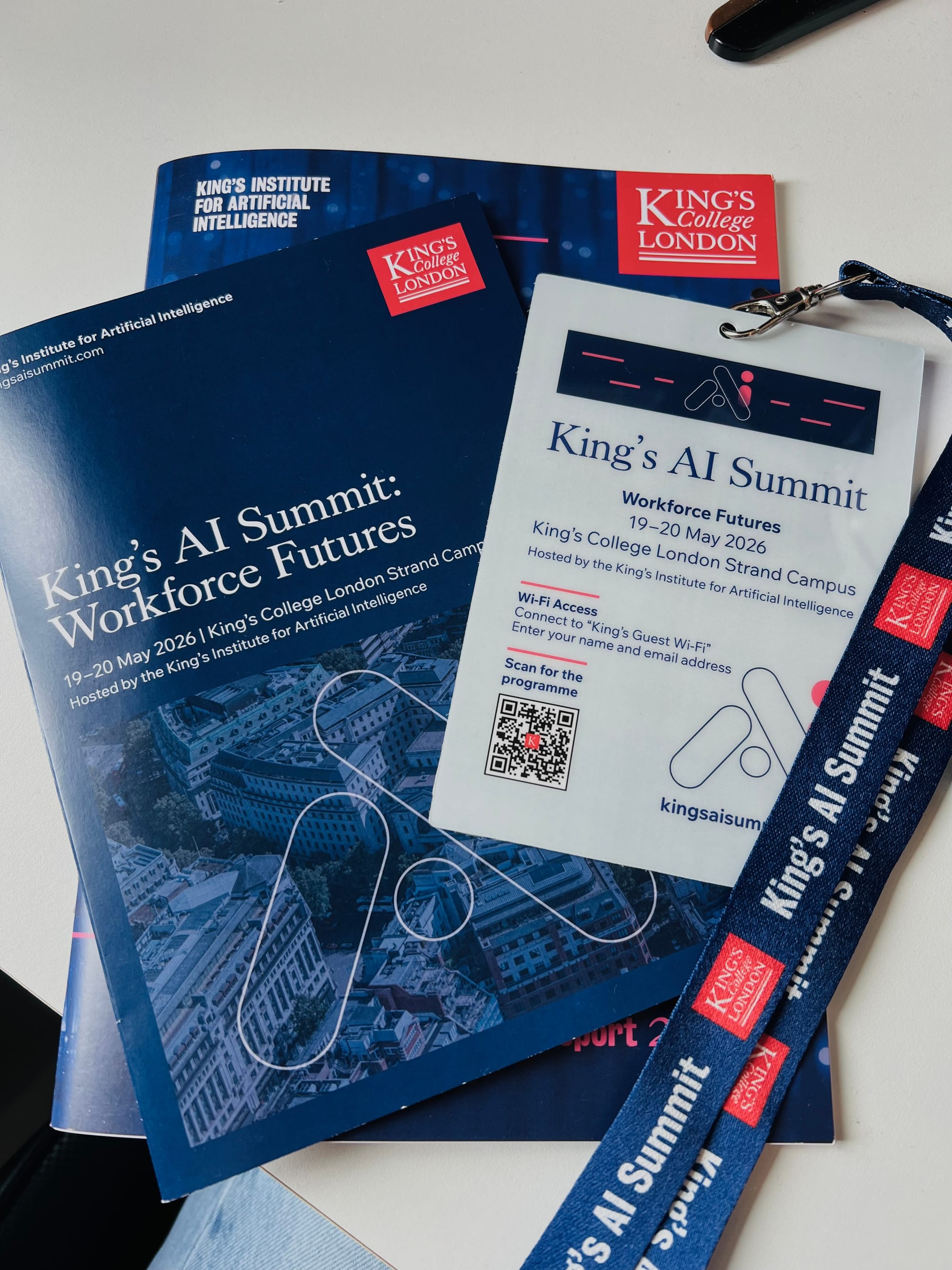
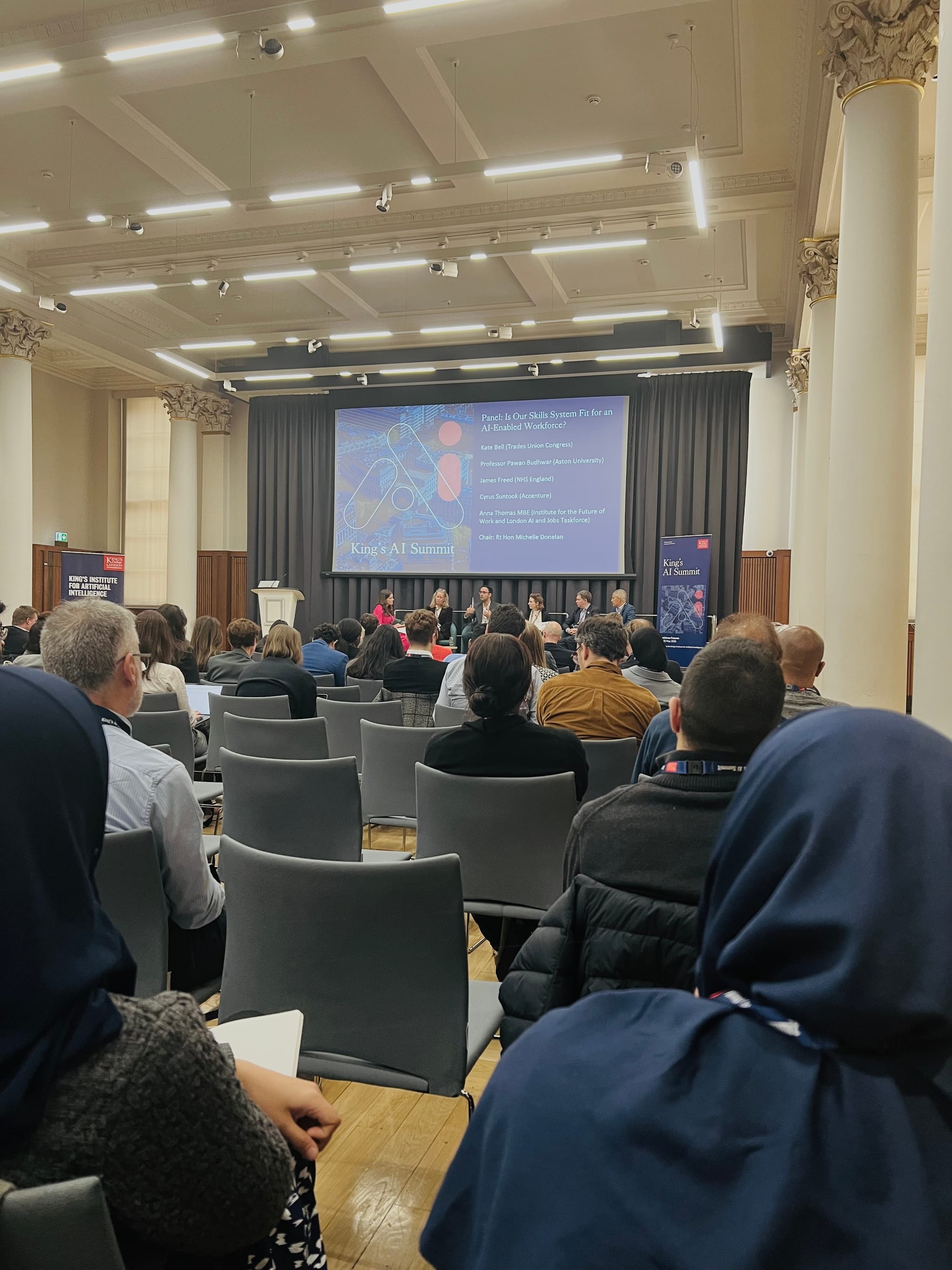
King's AI Summit: Workforce Futures
One thing that struck me as I sat in the Great Hall and listened to the keynote speeches and panel discussions was the sheer volume of paradoxes in the AI conversation. I watched the speakers wrestle with the same paradox again and again: AI as both solution and problem, promise and threat. We all seem surprised by this paradox, and yet it's one of the fundamental truths of life itself. Every up has a down, every good has an evil, and every cloud has a silver lining. AI is no different.
I would argue that what makes AI “good” or “bad” is not AI itself, but what we choose to do with it and how we choose to perceive it.
Take Lego as an example...
A piece of Lego alone is not inherently bad, is it? But what if I choose to wield that piece of Lego as a weapon? What if I deliberately place it on the floor where you’re likely to stand on it? Who is the villain in that story: me, or the Lego?
What if we took this even further? Say I placed the Lego on the floor, and you stood on it and hurt your foot. In that moment, you might think the Lego is bad, or you might think that I am bad for placing it there. But what if you spent some time rubbing your foot better, which meant that you were running late for work, which meant that you narrowly missed a road traffic collision that you would otherwise have been in. Is the Lego bad then? Am I bad then? Or what if, rather than leaving the piece of Lego out for you to stand on, I instead use it to create the world's largest Lego unicorn. Is the Lego then good? Is it, in fact, art?
It reminds me of the ancient Taoist parable known as The Story of the Chinese Farmer, where every event is followed by the farmer saying, “good news, bad news, who knows?”
When the farmer's horse runs away, he says, “good news, bad news, who knows?”, and when the horse returns with more wild horses, he still says, “good news, bad news, who knows?”. When is son is injured tending to one of the wild horses he says again, “good news, bad news, who knows?”, and the cycle continues. The story serves as a reminder that no event in this life is truly good or bad because its consequences are unfolding infinitely. It’s only our choice to label events that make them so.
This is the crux of the AI paradox, of the evangelists and sceptics, of the pro and anti, of the good and the bad. The truth is that we don’t know what AI is, and it’s that uncertainty that makes us uncomfortable.
For me, this all comes back to intention. We can reject both sides of the coin and see the paradox for what it is. AI is neither good nor bad but is instead shaped almost entirely by human choice and intention. And so the question becomes: how will we choose to use it?
Not bad for a last-minute attendee…


Member discussion