The Cave of Depth (pt.2): A Framework for Technology and Humanity

Call me crazy, but there’s nothing better than spending a Sunday tackling one of the most fundamental questions in modern life: what is the impact of technology on human flourishing, and do we have the agency to shape it?
If you’ve read my previous post, Never Underestimate the Power of Five Hours and some Blue-Tac, then you’ll know that my recent discovery of deep work has revolutionised my life. Following on from my first deep work session which, spoiler alert, went magnificently, I decided to schedule another.
This time, I was focusing on the development of a framework tackling the question I opened with:
“What is the impact of technology on human flourishing, and do we have the agency to shape it?”
I’ve been thinking about this question, or some form of it, for quite some time. It started niggling at me during an existential crisis I experienced after five years of working from home and spending most of my time staring at screens. Now, many moons later, I am just starting to figure out how to answer it.
As with many of life’s great mysteries, I plan to uncover it (or at least explore it) using a framework. I’ve named this the SlowTeching Framework because its premise reflects slow living and minimalism (i.e. we live alongside, work with, and use too much stuff, and it’s impacting our health and happiness).
The night before the session, I printed all relevant documents and gathered all paraphernalia (think blue-tac, post-its and biros over laptops, apps, and the internet). Luckily, Adam had planned a day-long airsoft trip with the boys on Sunday, which meant I had the whole house to myself. I prepared the bedroom by removing all digital tools and screens, transforming it into what I now affectionately call The Cave of Depth.
Everything was prepared, and I slept on Saturday night like a kid before Christmas, desperate to unwrap whatever insights my brain would provide.
The Cave of Depth
On Sunday morning, I woke up slowly, threw my phone in a cupboard (I do quite enjoy doing that), slammed the door, and made a coffee. I watered my plants and emptied my dishwasher. And I made my way to The Cave of Depth.
Everything that follows is a work-in-progress. I share it all because I think this kind of transparency gives people a real example of what SlowTeching is, while I’m figuring it out myself. It’s meta: the SlowTeching Framework aims to give us a better understanding of what a good relationship with technology looks like, and its development is being shared in real time by a practitioner who is trying to figure out what a good relationship with technology looks like for her. Circles within circles, right?
I began the session in productive meditation, which is where you focus on a single problem while physically idle to try to solve it. I focused on my definitions here: what do I mean when I say “technology-enhanced”, technology-saturated", and “SlowTeching”? What do each of those things look like, and feel like?
I spent ten minutes meditating and, as soon as I opened my eyes, I picked up a pen and began to write.
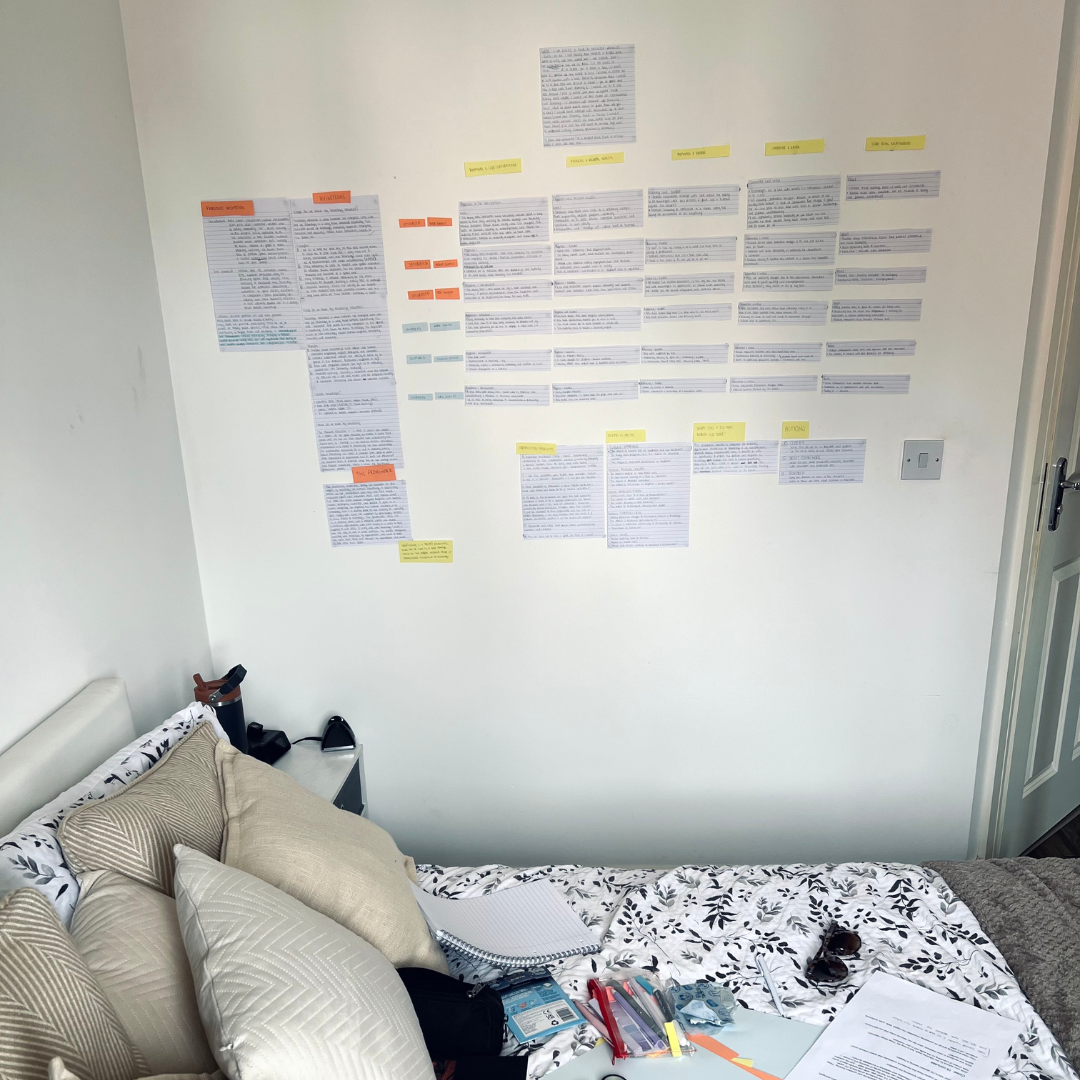

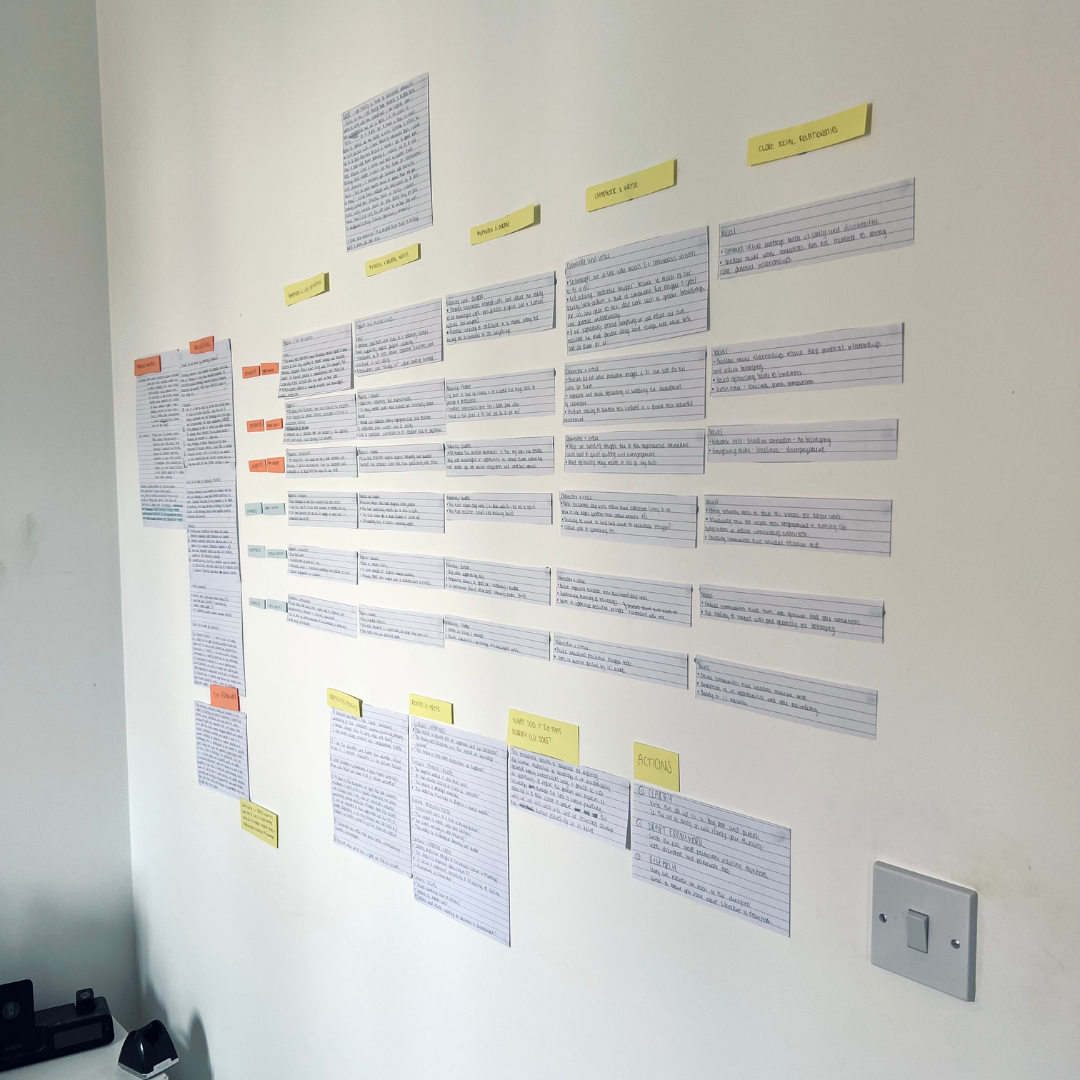
The Cave of Depth - June 2026
Technology-enhanced
Technology-enhanced is when humans live alongside, work with, and use technology in a way that enhances flourishing. This definition focuses on technology's ability to positively impact human happiness, wellbeing, meaning, character, and social relationships.
Examples of technology-enhanced:
- I used AI to help me plan my deep working session. The sessions themselves are free from technology, but planning them with AI enables me to spend more time cultivating a deeper understanding and progressing my projects. This leads to feelings of satisfaction (happiness) and meaningful progress (meaning).
- I use WhatsApp regularly to keep in touch with my family, and we often use the platform to help schedule real-life meet-ups (i.e. family BBQs) (social relationships)
Technology-saturated
Technology-saturated is when humans live alongside, work with, and use technology in a way that hinders flourishing. The word “saturated” also points to one of the key components that threaten flourishing: too much technology. This definition focuses on technology’s ability to negatively impact human happiness, wellbeing, meaning, character, and social relationships.
Examples of technology-saturated:
- When working from home, the overuse of screens and digitally mediated relationships left me feeling isolated and lonely (social relationships)
- My use of social media platforms led me to compare my life to others, and conclude that my life was not as aesthetic, fun, adventurous, clean, perfect [fill-in-the-blank]. This made me constantly second-guess my life and my goals (meaning).
After having landed on these definitions, I began to think about the SlowTeching Framework itself. I wanted to create a simple, no-jargon, easy-to-understand articulation of the framework that even my boyfriend Adam would understand (no offence, Adam). I picked up my pen and got to work, and I’ve reproduced the outputs below.
A Description of the SlowTeching Framework
If I were describing the SlowTeching Framework to Adam, I would say this:
“You know how sometimes you look at your phone without really thinking about it and then suddenly three hours have gone by, and you find yourself unintentionally reading a Reddit thread about the meaning of life? And you know how you feel kind of foggy and lonely and confused and a bit existential after?
Yeah. So, I’m basically creating a framework exploring how we could reduce that while simultaneously increasing opportunities for doing stuff (with or without tech) that makes us feel good. Like going to play airsoft with the lads. Make sense?”
This definition helped me to understand the framework even more myself, especially where I say that the framework increases opportunities for doing stuff (with or without tech) that makes us feel good. For a long time, I thought this framework focused too much on the negative, and I worried it came off as anti-tech. But I’m realising now that it’s not anti-tech at all. It’s pro-intentionality - with or without technology.
When I describe the SlowTeching Framework to myself, I say this:
“The SlowTeching Framework aims to create a shared language for examining the individual, organisational, and societal impacts of technology for the ultimate purpose of increasing human flourishing.
The framework does this by breaking our relationship with technology into two camps: technology-enhanced (good) and technology-saturated (bad), revealing what these two experiences look like across the components of flourishing (VanderWeele, 2026): digital joy, wellbeing & physical health, intentional use & purpose, productive struggle & ethics, and digital belonging.”
Mapping the Framework
At this point, you can probably tell that the session was going well. I had a quick break, munched on a few strawberries, watered my plants, and settled in for the next few hours of deep work.
For this part of the session, I focused on mapping the framework itself. This meant covering the wall with yellow post-it notes, defining the table headings, and then filling it all in with notecards. It was a glorious exercise in analog working and reflection. As usual, I loved every second.
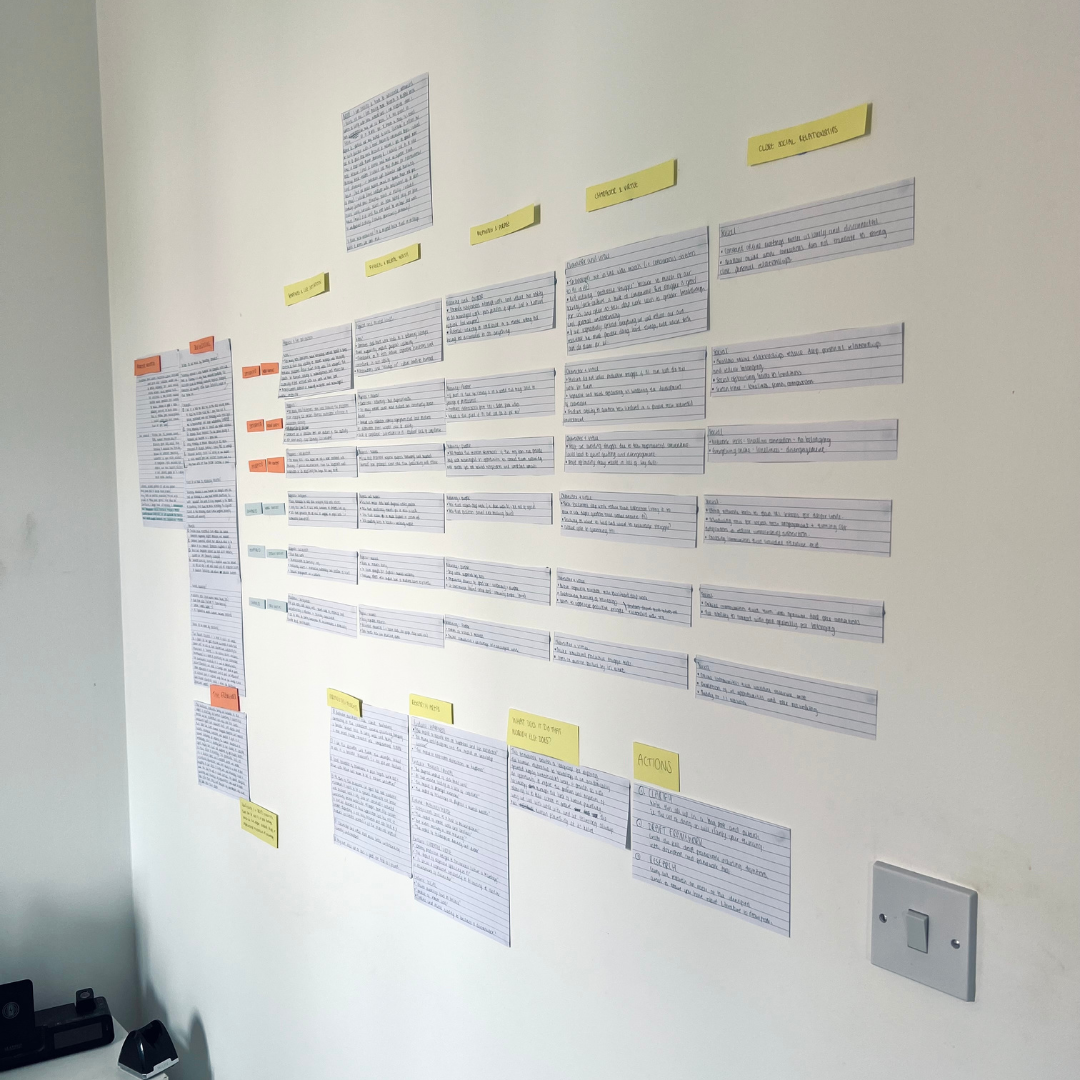
I realised quite quickly that the framework I’d plastered across my wall was huge. Too huge. It needed simplifying. Since the session, I’ve had a go at that simplification. Below is the first draft version of what this framework could eventually look like. I’d love to hear your thoughts. Be warned, though, it seems to have gone from ‘huge’ to ‘not-to-huge’, rather than from ‘huge’ to ‘simple’.
The SlowTeching Framework V.1
See what I mean by not-so-huge? That said, I’m making my way towards something more manageable. And look at where this deep working session took us! We officially have a draft framework to point to.
The cool down
When I stepped back to look at my creation, I couldn’t help but smile. This thing that had existed inside my head for so long was finally real. It was mapped out across my bedroom wall like an detailed cave painting. I sighed with relief.
The thing I love about these deep work sessions is that at the end of them, I always feel so sure of the next steps. Everything clicks into place. I wound down by noting the three most important next steps. These were as follows:
- Let this settle in my brain by writing a blog post about it (if you're reading this, then I’ve already completed that step).
- Draft the framework as a formal document, including definitions.
- Do research into some of the assumptions made in the framework.
Once again, deep work has shown me just how much I can achieve if I really put my mind to it – not my phone, not my apps, not AI, and not the internet – my mind. I feel closer now to what I’m trying to say than I ever have, closer to figuring out what a good relationship with technology looks like, not just for the organisations I work for, but for humanity too.
None of us chose to live in a world with abundant technology and constant distractions, but we sure as hell can choose how we live in it.
Watch out for part 3.
References:
VanderWeele, J. T. (ND) Human Flourishing Program, Harvard Institute for Quantitative Social Science [online] available at https://hfh.fas.harvard.edu/ (accessed 04/06/2026)
Newport, C. (2016) Deep Work: Rules for Focused Success in a Distracted World, Piatkus, Great Britain(accessed 06/06/2026)
Member discussion