The Cave of Depth (pt.1): Never Underestimate the Power of Five Hours and Some Blue-Tac

I had an existential crisis in 2025. It was brutal. It happened shortly after I graduated with an MSc. Looking back, I can see how the lack of studying contributed to it. Without anything meaningful to study, I lost all feelings of satisfaction and purpose.
Don’t get me wrong, I was busy as a graduate. There was always a never-ending array of things to do: place Tesco order, pay bill, reply to email, cancel plans, post to Instagram, put PowerPoint slides together for meeting, take notes, throw notes away, send Teams message, call colleague, respond to Teams message, update email signature, stay available, never log off, and just keep going.
Some days, as I was being pulled from one online platform to another, from one task to another, from one meeting to another, my coffee would go stale and cold in front of me. I would stop, lay my head on my cold desk, and silently pray for it to end. I was suffering through a crisis of meaning. And the cause was shallow work and network tools.
About six months into the crisis, I left my job, worked my notice, got sick, and crawled into bed for what felt like a month. I couldn’t do anything, feel anything, or anchor onto any goal or obligation.
For the first time in my adult life, I had time, and nothing to fill it with.
It was only then that I realised the full impact of arbitrary busyness, of filling every waking hour of your day with shallow work, and of allowing yourself to be constantly, unrelentingly distracted by media, notifications, calls, messages, and social media.
After recently reading Cal Newport’s book, Deep Work, I discovered that I was not alone. As Newport elegantly puts it…
“On our worst days, it can seem that all knowledge work boils down to the same exhausting roil of e-mails and PowerPoint, with only the charts used in the slides differentiating one career from another.” - Cal Newport, Deep Work, p.7
In other words, the work feels pointless.
It’s easy to see how our always-on technological culture is reducing opportunities for deep work; notifications, instant messaging, relentless marketing messages and now AI chatbots are all pulling us away from the deep and towards the shallow.
But as we increasingly outsource production, creativity, ideation, and focus to our AI colleagues, we risk losing the ability to perform deep work altogether. Ironically, the rarity of deep work is making it increasingly valuable, and its ability to alleviate feelings of meaninglessness (at least for me) makes it a worthy way to spend our time.
If I’ve learned anything through all of the research, reading, and writing I’ve been doing around the relationship between technology and humanity, then it’s this: we will not improve anything in our lives unless we are deliberate about it. We can read all the books in the world, but unless we act on what we read, we’ll never learn, change, or improve. And so I set out to experiment with my own version of deep work, and this is what I found…
Rediscovering Deep Work
I decided to work from my bedroom for around 4-5 hours on a Saturday morning. It’s one of the only places in the house free from screens. I left all devices outside of the room and replaced them with pens, paper, and Blu-tac. I told my mum and Adam that I’d be unavailable, and prepared some refreshments and snacks to take with me. Finally, I wrote out a small plan and a list of things to cover.
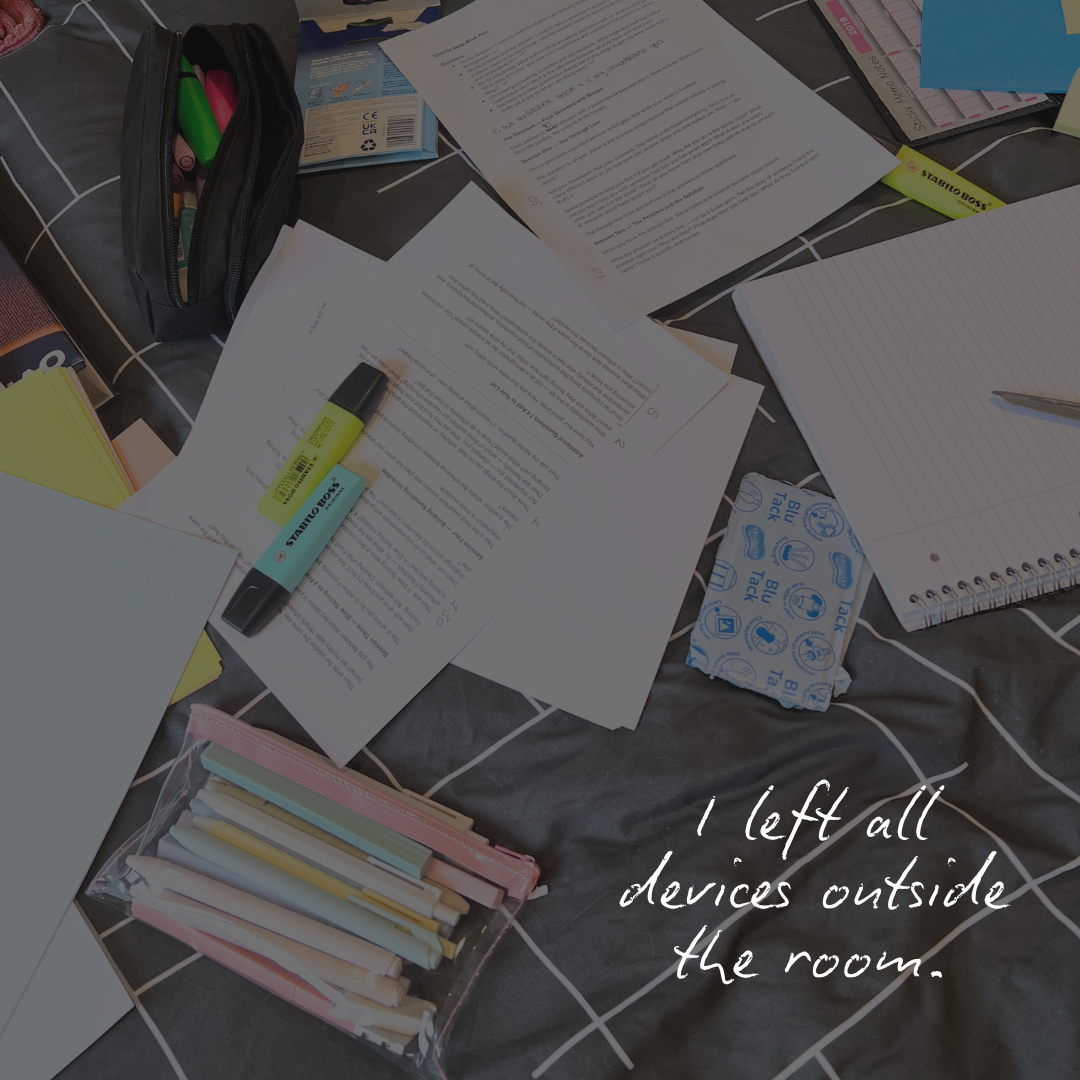
On the morning of the deep work session, I gathered all of my notes, paraphernalia, and snacks, and entered what I now call The Cave of Depth (my bedroom). I laid everything out on the bed, read my notes, and spent the first ten minutes in productive meditation, which is where you focus on a single problem while physically idle.
My problem was this: what is the core message I want/need to share through my writing? I knew I wanted to write about technology and humanity, but I needed something more concrete. I’d struggled to define it for months.
I was completely baffled to discover that within the first ten minutes of productive meditation, I’d figured it out. My eyes opened exactly ten minutes after I had closed them. I picked up a pen, and I began to write.
From then onwards, it’s a blur. I worked my way through my plan, paying little to no attention to the time, pausing only to sip some water. On occasion, I would take a step back, look at my work, and marvel at the progress I was making. Things were clicking into place.
I defined my message and did so, so much more. I identified the beliefs that my message draws from and played with language and vocabulary in unexpected ways. I used yellow and purple sticky notes to map out my problem, my solution, and the journey between the two. And most importantly, I dug into how my message could help others.
What I ended up with was a rich tapestry of thinking that was… mine. Wholly, completely, utterly mine. Not mediated by technology. Not mediated by AI. It was my brain, my soul really, spread out across my bedroom wall. Held together by bluetac.
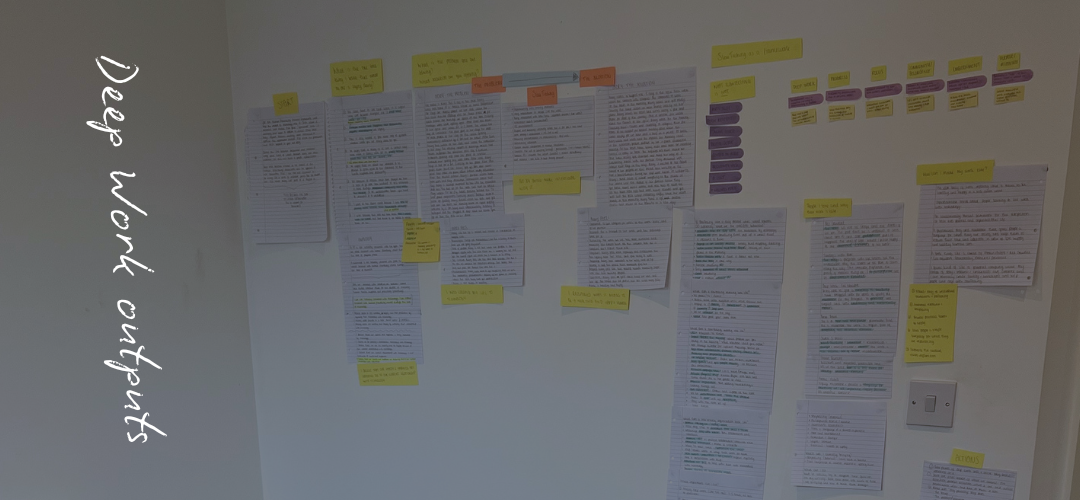
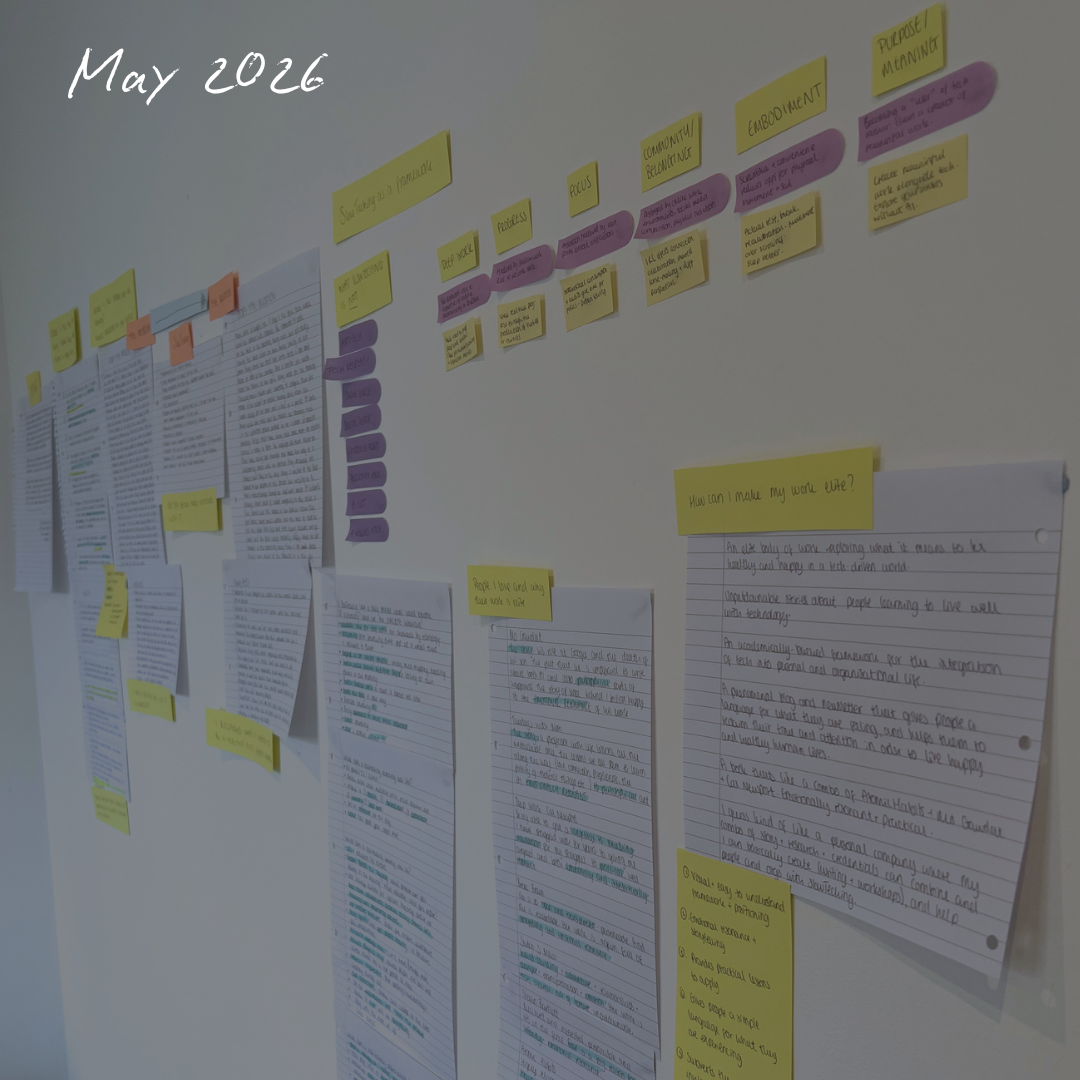
On reflection, I think that work was inside me all along, waiting to be released. It could be set free only by scheduling time for it. I realised that what I’m interested in, what my message is, is not really about technology at all. It’s something closer to human nature, to the act of creation, and to Cal Newport’s deep work. My message is this:
“The most radical thing you can do is decide how to spend your day.”
It’s about living deliberately in a world full of distractions. It’s about taking ownership of our lives, and of our imperfections, and learning not to waste what little time we have.
The results were unambiguous: not only did I absolutely adore the time I spent in deep work, but I also clarified the work itself. Hashing this out with AI would never have led to this realisation. Only I could. Only me, my Blu-Tac, and five hours of intentional isolation. It’s ironic and powerful in the same breath.
When Adam came into the room at midday and found me sprawled across the bed, covered in post-its and smiling at my thought-splattered wall, he thought I’d gone insane. But a little crazy is better than a lot distracted, and I feel grateful to have rediscovered the value of working deeply.
I’ll leave you with this…
I had an existential crisis in 2025. It was brutal. But it taught me what I needed to know. In a world that is constantly trying to distract me, I will do the most radical thing there is, and decide how to spend my day. I wonder if you’ll join me?


Member discussion