The Pendulum Swings: AI as both Good and Evil
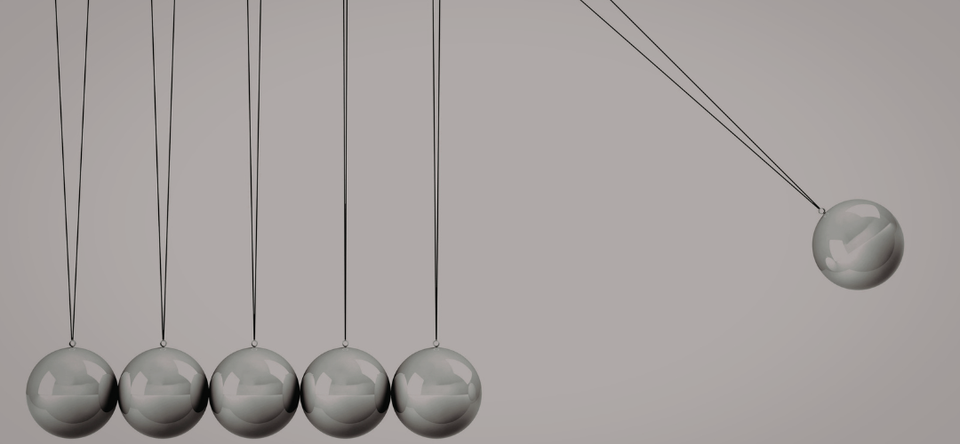
It’s a curious rule of this life that every good day is followed by a bad one. Just as you think life is working in your favour (your train is delayed when you’re already late), it flips around again (the train is cancelled). This back and forth is a rule we know to be true, and yet we rarely stop to acknowledge it. We damn evil without recognising that without it, there is no good. The pendulum swings.
I’ve been thinking about this a lot lately - how there’s always an argument for and an argument against - and how it relates to stories around AI. I’ll attempt to describe it here, so that we might acknowledge the grey area of AI, and perhaps become more comfortable living within it.
As we begin, I want to share a quote that F. Scott Fitzgerald famously wrote:
"The test of a first-rate intelligence is the ability to hold two opposed ideas in the mind at the same time, and still retain the ability to function." (Fitzgerald, 1993)
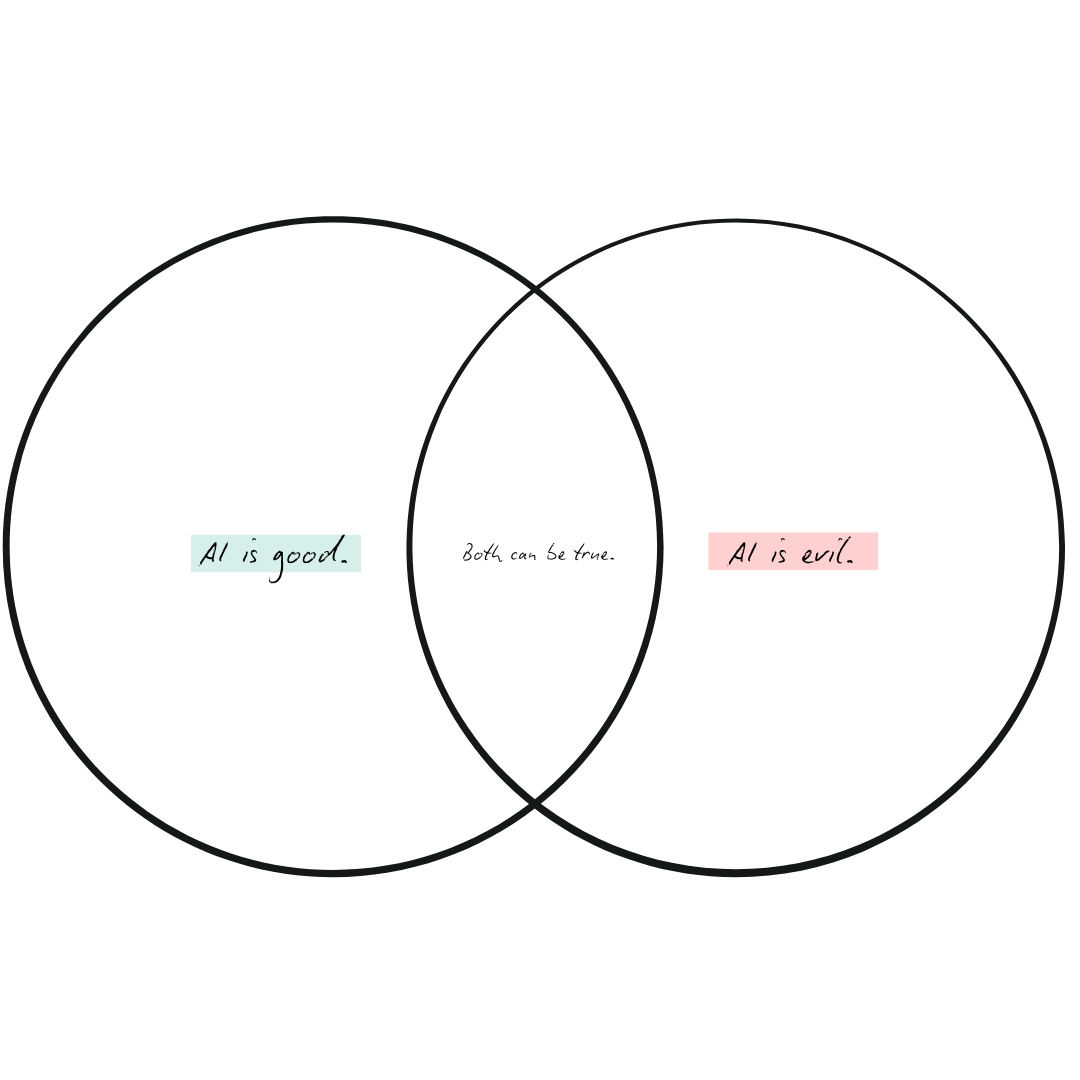
There’s a modern term used for when our brain struggles to hold two opposing truths at once. It’s called cognitive dissonance. You might refer to yourself as a healthy person, and yet you smoke. But if challenged on this point, you would likely start your next sentence with something like “yes, but…” before proceeding to list all the things that make you a healthy person. But the truth is that you are both healthy and unhealthy in the same breath. This is also true for AI (and arguably all technology). We park ourselves in a single camp (AI is good or AI is evil), and cognitive dissonance prohibits us from recognising both as fundamentally true.
Dystopia vs Utopia
Stories around AI swing like the pendulum. On the one hand, we have people hailing AI as the miracle of the 21st Century. It will cure cancer, solve climate change, and be the most powerful and intuitive personal assistant that you never knew you needed. Roll on AI, they say, utopia has arrived!
Until the pendulum swings.
As if out of nowhere, dystopia comes knocking. AI, it seems, poses catastrophic risks via Artificial General Intelligence (AGI), is biased, consumes vast amounts of energy, and steals copyrighted art, music, and writing. AI reeks of dystopia.
Despite the temptation to join a single view, there is another way. Either swing with the pendulum or let go altogether. Rise above the stories of good and evil and recognise that both can co-exist, that they always have. AI is both a utopia and a dystopia. It’s purgatory, containing a dash of each, not dissimilar to life itself.
Use vs Boycott
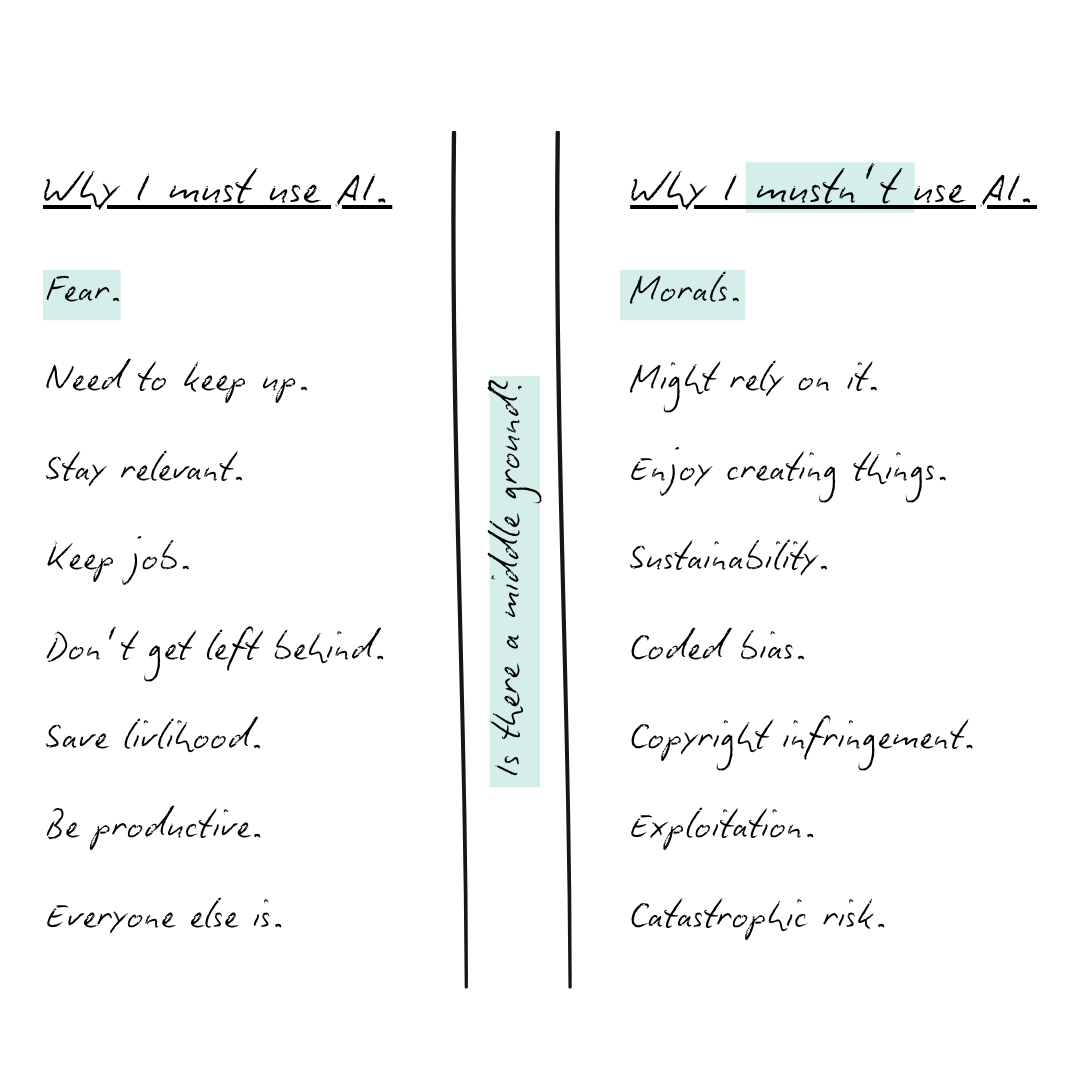
The confusion continues with the second story I’ve noticed: the use vs boycott binary. It goes something like this: either use AI for everything and retain your professional clout, or boycott it on moral grounds and get left behind by the entirety of society (likely unable to find work in just a few short years).
Personally, I don’t know many people who are boycotting AI. The fear narrative around being left behind is so strong and so compelling that most of us are too afraid not to use it.
For me, this leads to a rather uncomfortable binary: I use AI tools even though I’m aware of their harm. I know that AI has a huge impact on sustainability, that data centres are being built in vulnerable communities, that AI perpetuates biases and risks isolating already-marginalised groups, and that real humans are exploited because of it (either via data labelling or by scraping creative works from the internet with a complete disregard for copyright).
What makes this worse is that I also know about the catastrophic risk. The risk to humanity if we reach Artificial General Intelligence (AGI). And yet, despite all of this knowledge, I use and, I am embarrassed to admit, actively advocate for the use of these tools.
Why? Because I’m afraid. I’m afraid of being left behind, of being excluded from the future in some way. I don’t want to be the only person who doesn’t use AI, the only one fighting against the current.
Everyone is using these tools. I must too.
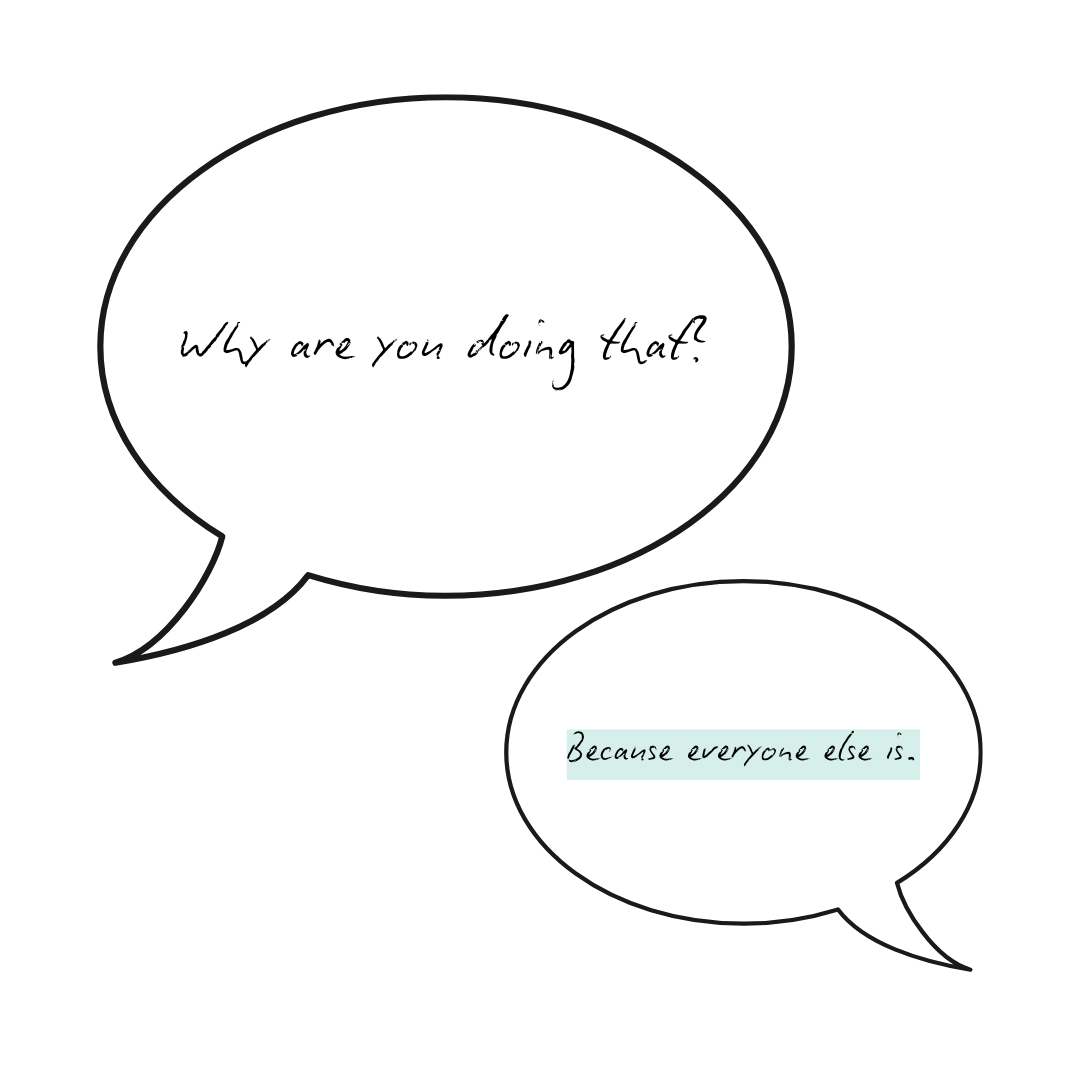
Have you ever heard of the term Collective Illusion? It’s one of my favourite concepts coined by Dr Todd Rose, and it relates to the human tendency to conform to social norms, even when we don’t believe in them. This has been observed throughout history and can even be seen today. So many of us struggle with the system we’re in, and yet we keep quiet and carry on. Why? Because that’s what everyone else is doing. But if we all disagree with AI on moral grounds, and yet we use it simply because everyone else is, then we are all living in a collective illusion; a shared, mutually agreed hallucination. The emperor must be wearing clothes.
After all of this, I don't have a resolution for you, and if I’m honest, I don’t think one exists yet. What I do have is the observation that most of us are swinging with the pendulum rather than watching it. We're living inside the binary rather than noticing it exists. Maybe that's where we start. Not with answers, but with the willingness to sit in the uncertainty and look at it honestly.
The pendulum will keep swinging. It always does.



Member discussion