Three Screens and a Headache
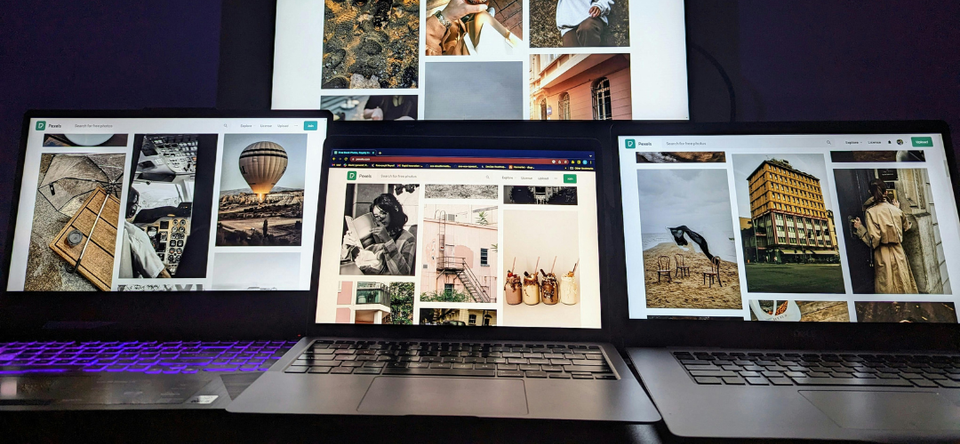
I have a headache. A painful, thumping feeling coming from directly behind my eyes. It's 13:15 on a Saturday. I'm working on my blog. I have three screens in front of me: a laptop, a monitor, and a phone. I pop an ibuprofen.
It's moments like this that I’m reminded… too much of a good thing leads to negative outcomes. I already know what the problem is, and I bet you do too. What caused my headache? What led to this painful pinch behind my eyes?
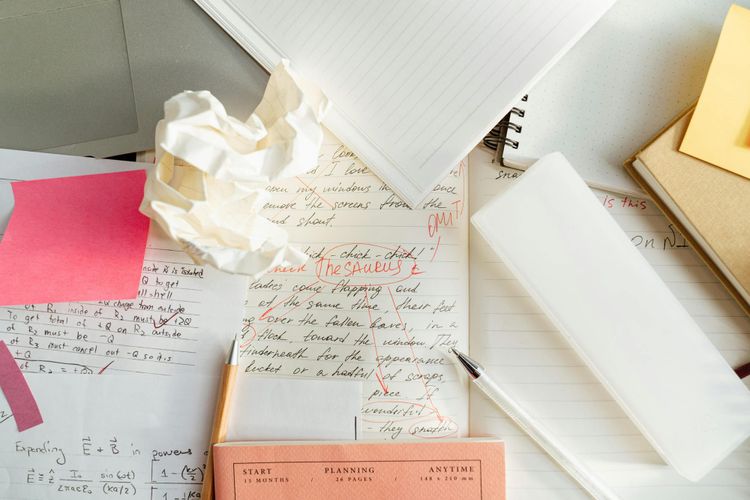
You're probably reading this on a screen, but this particular piece of text was originally written by hand. After realising where my headache came from (hint, you're likely looking at it right now), I decided to switch things up. I reached for my notepad and an old, unused pen, and I began writing (historic, I know). Here's a photo of what this post looked like before I typed it up.
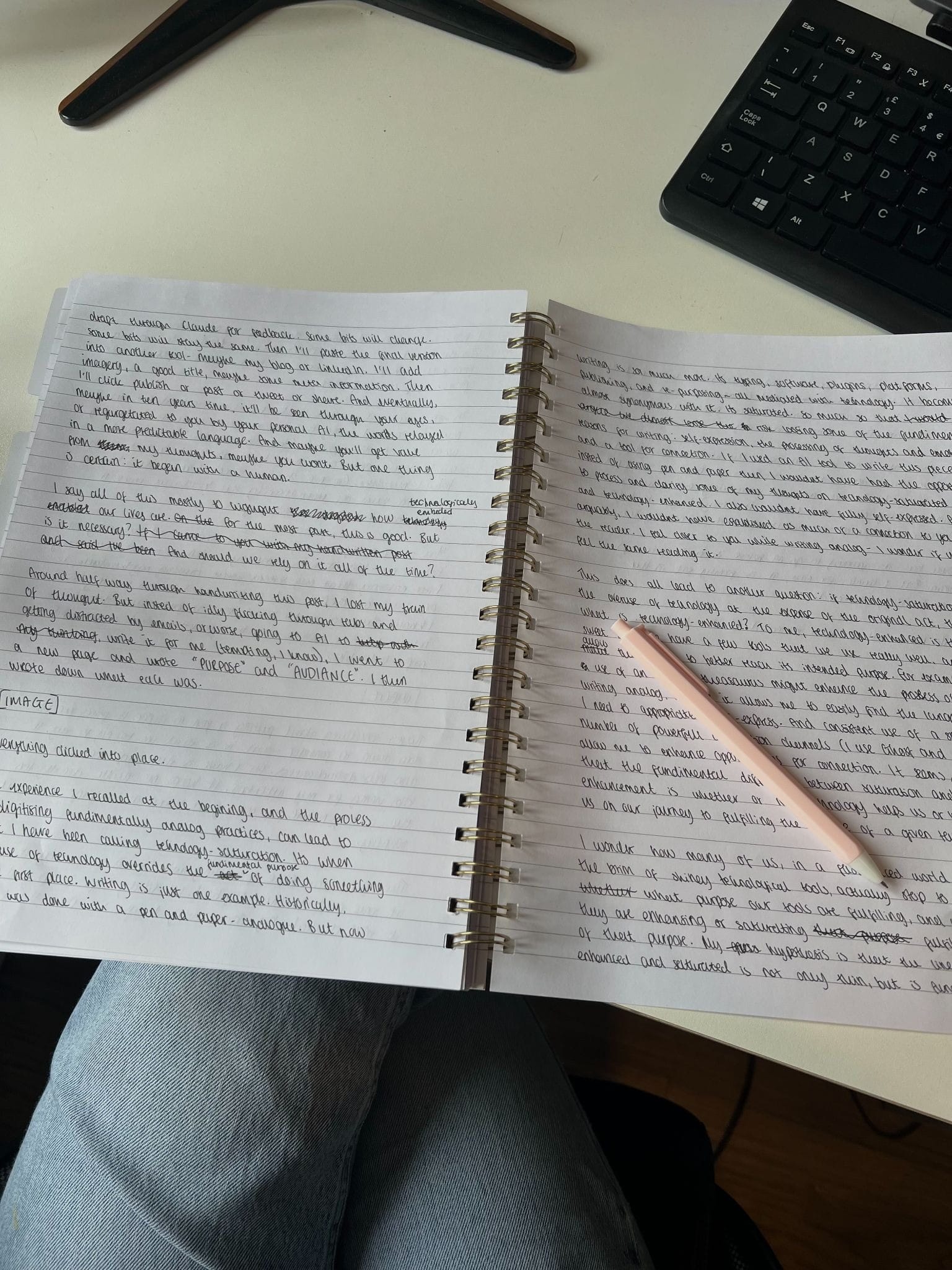
There's something about putting a pen to paper. It forces you to slow down, to consider what it is that you're trying to say. It also feels strangely distractionless. All I have is this page, without 50+ tabs vying for my attention. It's helping me think clearly, too. My hand is dancing across the paper as language spills into my office silently.
This particular piece of writing will go on a journey. It will, at some point, become digital. I'll likely type it up and use Grammarly to spell check it. Maybe I'll pass it through an AI tool for feedback. Some bits will change. Some bits will stay the same. Then I'll paste the final version into another tool – my blog or LinkedIn. I'll add imagery, a good title, and some meta information for search. Then I'll click publish, post or share. Eventually, maybe in three days, maybe in three years, you'll read it through your eyes. Or maybe it'll be regurgitated to you by a chatbot, the words reconfigured into a more predictable language. Maybe you'll get value from it. I hope you do.
I say all of this to illustrate how technologically entrenched our lives are now, which begs the question: is all of it necessary?
Around halfway through writing this piece with my pen and paper, I lost my train of thought. But instead of idly flicking through tabs on my laptop, or getting distracted by my emails, or (worse) asking AI to finish it for me (tempting, I know), I went to a new blank page and wrote "purpose" and "audience".
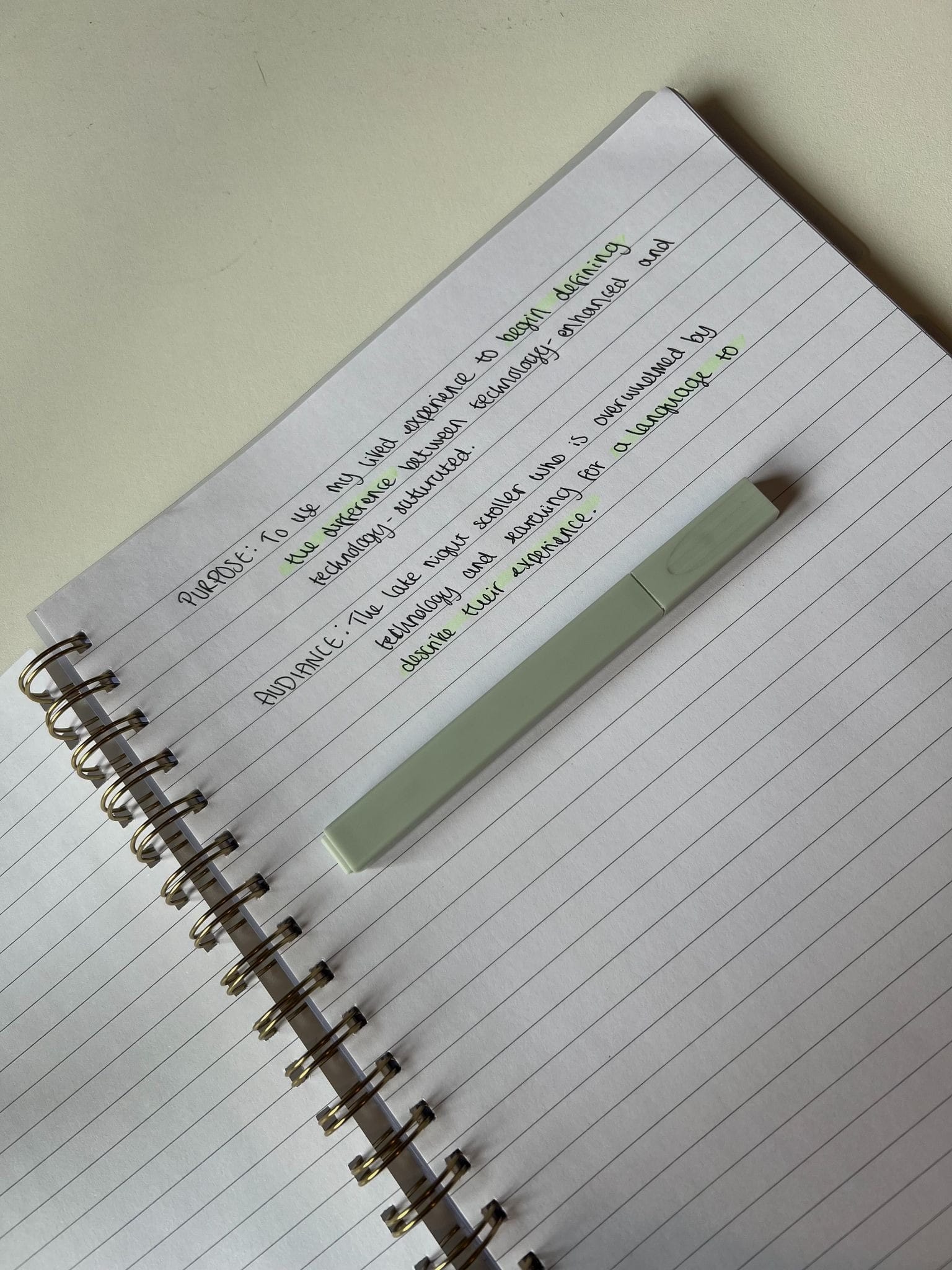
I added a small note for each one. Everything clicked into place.
The headache I wrote about at the beginning is a symptom of technology saturation. It's when the use of technology overrides the fundamental purpose of doing something in the first place. Writing is the perfect example because it now includes typing, software, plugins, platforms, publishing, and re-purposing – it’s almost entirely mediated by technology. In fact, I would argue that technology is used so much during the writing process that we’ve lost some of the fundamental reasons for writing in the first place: self-expression, the processing of thoughts and emotions, and using it as a tool for connection.
In fact, I would argue that technology is used so much during the writing process that we’ve lost some of the fundamental reasons for writing in the first place: self-expression, the processing of thoughts and emotions, and using it as a tool for connection - Mary-Ellen Simper
If I'd used an AI tool to write this piece instead of using a pen and paper, then I wouldn’t have had the opportunity to process and clarify so much of my thinking, and I likely wouldn't have established as much of a connection with you, the reader. I feel closer to you having written this piece by hand – I wonder if you feel the same?
So, if technology-saturation is the overuse of technology at the expense of the original act, then what is technology-enhanced? To me, it’s the sweet spot: a few tools used really well.
My hypothesis (so far) is this: there is a line between technology-saturated and technology-enhanced, and it’s a fundamentally personal one. For me, technology-enhanced makes me feel happier, more productive, and more connected to the humans around me. It leads to human flourishing. Saturation, on the other hand, makes me feel disconnected, lonely, distracted, and directionless.
Let me bring you back into my office for a moment. My headache has passed, and I have written four pages. My wrist aches lightly. I feel... satisfied. Like I've achieved something. I understand my own thinking and positioning a bit more, too.
Maybe we lose this feeling when we reach for the screen before anything else. We lose a bit of focus, a bit of processing, and a bit of thinking.
Next time you feel a headache approaching, or your attention gets kidnapped by a rogue notification, you might try a bit of experimentation yourself. Let go of the screen for a moment. See where it leads.



Member discussion