Lost, Lonely, and Distracted. But is it Technology’s Fault?

I remember the ache of waking up every morning and living a life that I despised. I’d click the kettle on and stare at it absentmindedly, checking my phone and dreading my day. That’s no life to live. And yet it’s one that many of us are familiar with.
People thought me lucky at the time, actually. I had one of those fancy working-from-home jobs that meant all I had to do was roll out of bed in the morning and make my way into my home office. Some days, I wouldn’t brush my hair until just before my first meeting (even if it was at 3 pm). Lucky me.
Three words come to mind when I think about that time in my life…
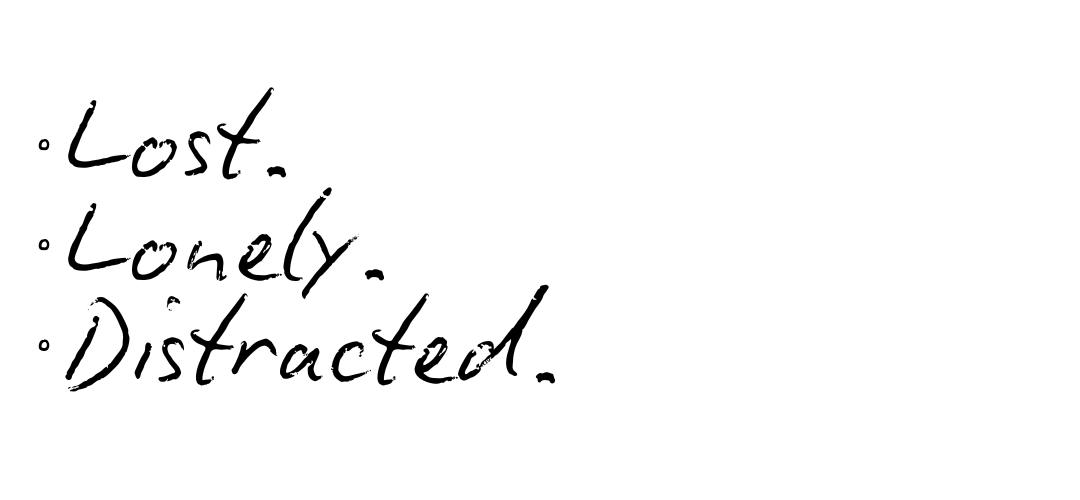
If I’m honest, I’m ashamed to admit that I didn’t stay in that state for a few days, a few weeks, or a few months. No. I enjoyed that particular kind of hell for around two years, and it was brutal. My days became a blur. I dutifully attended Teams meetings, circling back and streamlining, all while being buried alive by email threads, policy documents, and notifications.

The First State: Lost
In the small and unexpected moments of quiet, my brain would begin filling the void with everything I didn’t want to hear. A poisonous whisper on the wind. It would begin with surface-level criticism, pointing out how stupid I was for adding an emoji to an email. Then it would become harsher, more determined to beat me down. It was out for blood. My brain would helpfully describe, in detail, all the reasons I’m worthless. It sounded something like this…
“The way you spoke in that meeting was ridiculous. You sounded like a clown. Everyone knows that you’re useless at this job. They’re waiting for the day that you leave. If you handed in your notice, they’d probably have a party. And you have that big spot on your chin. Disgusting. You’ll never be able to do anything consequential in this life. You’re just a scared little girl. Might as well give up.”
Moments like this would always be swiftly followed by a desperate Google search. Something like “I don’t know what I’m doing with my life”. I’d waste an hour on Reddit, scrolling through posts in the hope of finding my cure. It never eased the pain.
These were the moments when I felt most lost. Most purposeless. Desperate for meaning and yet drenched in a feeling of pointlessness.
The Second State: Lonely
As if by some cruel irony, the feeling of being lost carried me on a current that led directly to something just as insidious. Loneliness.
I wasn’t just physically alone in those online meetings; I was emotionally alone, too. Many knowledge workers know the special kind of pain you feel when colleagues opt to leave their cameras off in online meetings. When you’re left in a room full of emotionless initials and outdated photos. I was on stage, alone for everyone to see.
When the meetings ended, and my lunch breaks arrived, I dragged my phone towards myself, and I scrolled: the only respite in an otherwise humiliating existence. For a moment, I felt relief. Then it hit me twice as hard. Each ten-second clip revealed that almost everyone else was not, in fact, alone. People laughed, connected, and went on adventures. A stark contrast to the world I occupied, where Microsoft Teams seemed to be my closest companion.
These were the moments when I felt most alone. Most disconnected. Desperate for belonging and yet drenched in a feeling of isolation.
The Third State: Distracted
If all of this wasn’t bad enough, I also felt completely unable to get any meaningful work done. I would sit at my desk with my to-do list neatly laid out on my screen. Each task was like an ocean to swim across, with constant currents sweeping me away from the finish line. It looked something like this…
I would pick a task and be instantly interrupted by an email. In the email was a link. I clicked the link. In the link was an article. I read the article. The article gave me an idea about a project. I started looking for the shared notes on the project. I couldn’t find the shared notes. I sent a Teams message to a colleague. The colleague replied with a link. I clicked on that link. I began reading the notes and noticed an error in the project timeline. I began fixing the timeline. To fix the timeline, I needed to consult with my calendar. I opened the calendar on my phone. While on my phone, I noticed a personal email tagged as urgent. I opened the email. The email said I needed to upload a document to a portal. I started looking for the document. My phone rang. I answered the phone. A colleague asked me to do something. I added it to my to-do list.
I sat back in my chair and put my hands over my face. I couldn’t even recall the original task.
The current wasn’t just pulling me sideways; it was dragging me under. I was busy, and yet I got nothing done. I was drowning.
These were the moments when I felt most overwhelmed. Most suffocated. Desperate to do meaningful work and yet drenched in distraction.

When I look back, it seems that technology led to many of these feelings. Feeling lost was the result of incessant doomscrolling and led to googling “what is the meaning of life”. Feeling lonely was the result of screen-mediated meetings and FOMO-inducing short-form video content. Feeling distracted was the result of network tools constantly vying for my attention with shrill notification pings and subject lines consistently tagged as urgent.
I was lost. I was lonely. I was suffocating. But was technology really the sole culprit?
Over the last year, I’ve been experimenting with my use of technology in the hope of building a better relationship with it. On this journey, I’ve discovered something that we might have missed: that it might not be technology’s fault at all.
Sure, being lost, lonely and distracted is in part due to technology, but it's also due to our culture. We seem to prioritise instantaneousness over patience. Convenience over struggle. Availability over respite. We are always on, always available, always connected. We are never, under any circumstances, uncontactable.
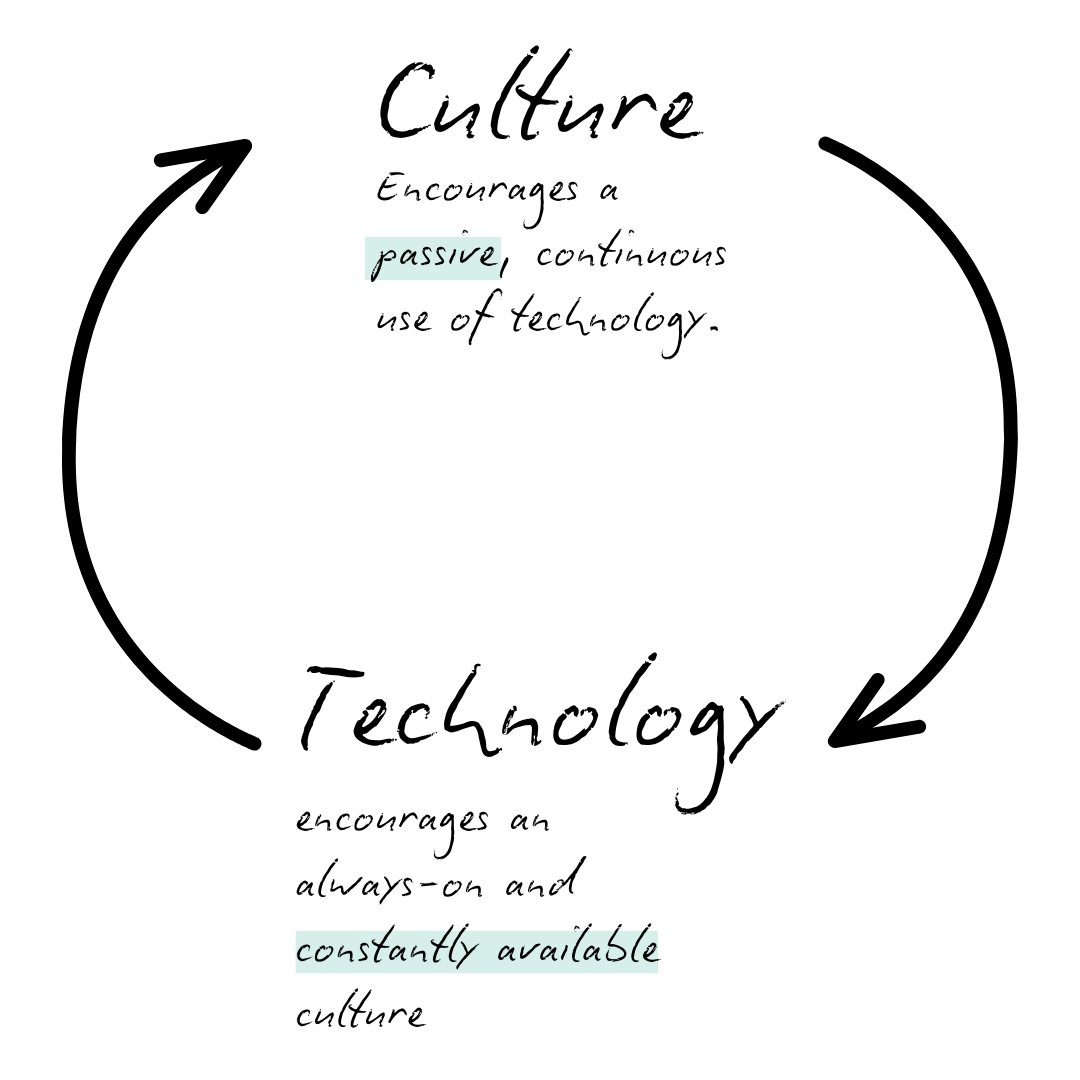
The culture encourages a passive, continuous use of technology. And technology encourages an always-on and constantly available culture. It’s a cycle.
But there’s something we can do about it.
One of my favourite quotes (you’ll see it in various locations across this site) is from Tuesdays with Morrie by Mitch Albom. It says:
"The culture we have does not make people feel good about themselves. And you have to be strong enough to say if the culture doesn't work, don't buy it. Create your own."
Our current technology culture doesn’t make people feel good about themselves. It doesn’t work, so I’m not buying it. And together, we can create our own.
My conclusion is this: technology isn’t inherently bad, but the way we use it and the culture around it are. We use technology passively and without intention. We set no boundaries with it. We fold to the pressure of always being available, and we rarely stop to experiment with alternative ways of living. We simply roll over and accept feeling lost, lonely, and distracted.
I started this blog by questioning my relationship with technology, but I’ve realised that what I want to talk about here goes deeper than that. It’s about being intentional, having agency, and the freedom to choose. Not just in terms of technology, but in life more broadly. When I’m intentional, I feel alive. A happy by-product is that my use of technology becomes healthier, too. That’s what this blog will be about.
I no longer wake up every morning and live a life that I despise. I no longer click the kettle on and stare at it absentmindedly, checking my phone and dreading my day. Instead, I actively choose the life I want to live. And for me, that means rejecting the culture and putting down my phone. Maybe you’ll try doing the same.




Member discussion